Catanzaro City Fortress: Bastions, Gates, and Walls of the "Impregnable Capital"
Contenuto dell'articolo
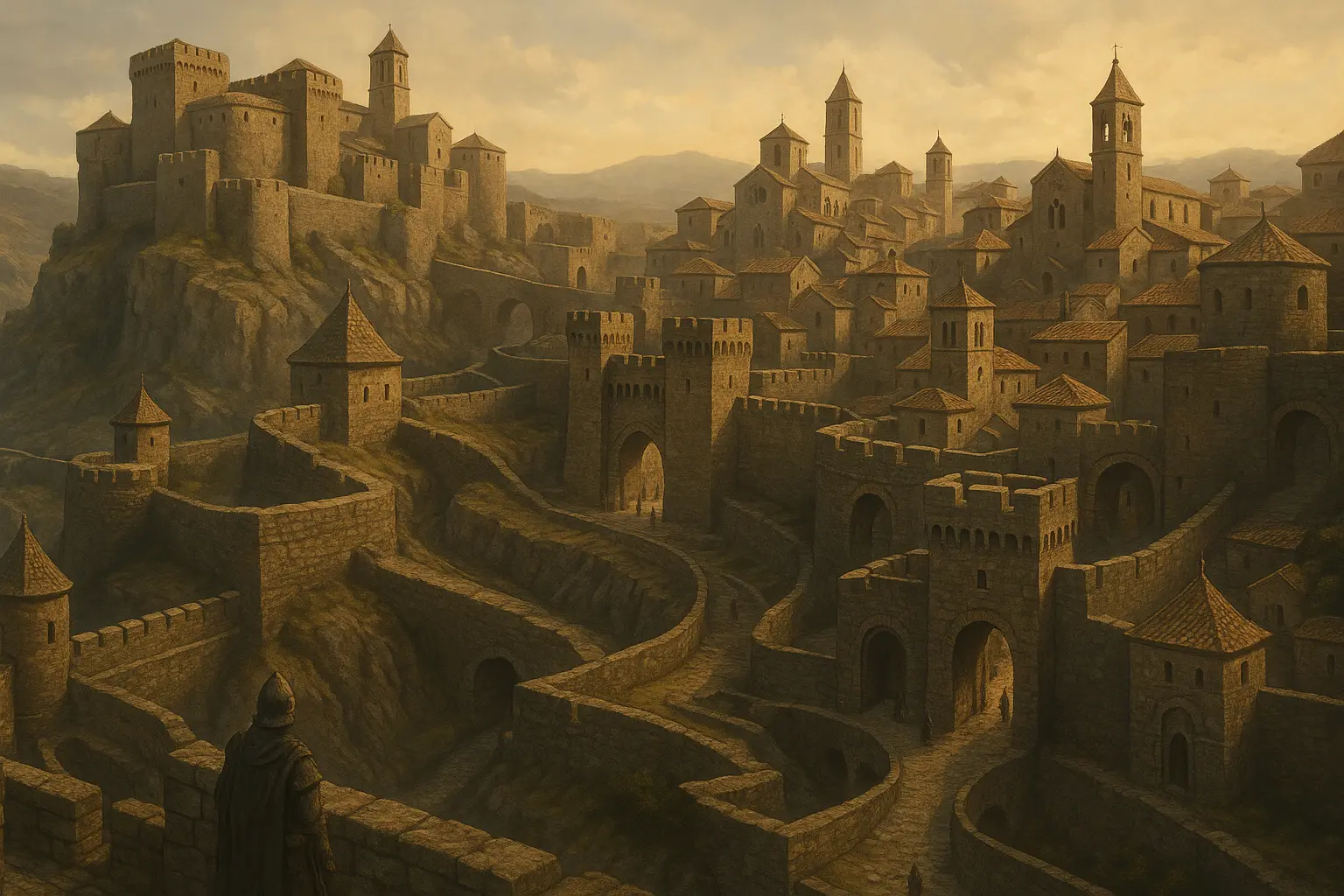
In the heart of Calabria, perched on the Tre Colli, Catanzaro was for centuries one of the most feared and strategic fortified cities in the South.
This is how the chronicler D’Amato described it, recalling the arrival of Roberto il Guiscardo in 1055: "...Roberto entered victorious [...] and realizing that the dominion of Calabria depended absolutely on securing this Square, both because it was naturally impregnable, and because it was located in the center of the Province [...] he founded a very strong Castle at the end of the City, on a cut rock outside, with towers and bastions so well designed, which, connected to its natural fortress, made it secure from battery and assaults...".
A complete defensive system
Until the nineteenth century, Catanzaro's profile was that of a true fortress city: a wall about three miles long, towers, bastions, and civic gates marked its perimeter.
Defense was not only entrusted to the walls: the city fabric was designed as a network of neighborhoods, each with its own bastions and control systems.
The gates and towers
- Porta Marina and the Malacinadi district: a section protected by six bastions and numerous towers.
- Valle di Tubolo (Vallotta): from Porta Marina to here, four watchtowers (or three bastions according to D'Amato).
- Palmenta/Parmenta/Paulino district: protected by natural and artificial trenches.
- Montecorvino (S.
Maria de Figulis): home to the Baluardo dei Palmeti.
- Church of S.
Nicola di Morano: another important bastion.
- Valle del Musofalo/Conaci: guarded by the Cerausto tower (or the marchesa's tower); from this point, eight bastions and three towers, including the so-called Red Tower, extended along the urban perimeter.
Main gates and passages
- Porta di San Giovanni or Castellana: near the current Matteotti square, it was equipped with a moat and a drawbridge.
- Porta del Gallinaio: another strategic passage near the castle.
- Porta di Pratica / di San Leonardo: in the area of the Arse Houses; near the ancient convent of the same name and the bastion of S.
Nicola Coracitano.
- Porta di Sant’Agostino or Portella: located under the homonymous convent, now the former civil hospital, still visible in its wall structure.
- Porta Stratò: at the foot of viale De Normanni, adjacent to the Sanguedolce palace; the facade is now severely compromised, but inside there are remains of the small altar and the original altarpiece.
Cults, sentinels, and legends
Many gates were paired with votive chapels that also served as guard posts: the bell signaled the closing of the civic gates or situations of imminent danger.
Remains of these chapels—such as that of S.
Maria della Portella—testify to the dual sacred and military use, partly still visible today but in precarious conditions.
Legends abound: from the passable path...