From Scolacium to Catanzaro: the rebirth between myth and history

Contenuto dell'articolo
In the heart of Calabria, where the Ionian Sea caresses the coasts of an ancient civilization, unfolds the story of the transition from Scolacium to Catanzaro.
This transformation was not just a simple geographical shift, but the tale of a people who, finding their destiny in danger on the shore, sought refuge in the hills to give life to a new home.
The continuous Saracen raids drove the inhabitants of Scolacium, the ancient city overlooking the sea, to abandon the security of the coast.
Led by two Greek captains, perhaps brothers, named Cataro (or Cattaro) and Zaro, they moved inland in search of a safe harbor.
First, they settled on Zarapotamo, a promontory towering above the current district of Santa Maria, a place that still bears the mark of that choice, with the name "Santa Maria di Zarapoti."
Here, above the banks of the river Crotalo (today's Corace), the settlement took shape in a context where nature and history merge.
But the journey did not stop there: the two captains went to Constantinople to present the project of a new city to Emperor Nicephorus, obtaining his approval.
From that moment, accompanied by the Count of Flagizio, they returned to the coast, beginning the foundation of the Rocca di Niceforo in 813, a Christian bulwark in ancient Magna Graecia.
But there is another version, narrated in the "Chronicle of Catanzaro" by Luise Gariano, which depicts the birthplace of Catanzaro on a specific date: April 12, 793.
A day marked in time as the moment when the city took on the name in honor of its two brave leaders, Cataro and Zaro.
It is the memory of the guidance and courage of those who, in the chaos of invasions, knew how to chart the course towards a future of peace and settlement.
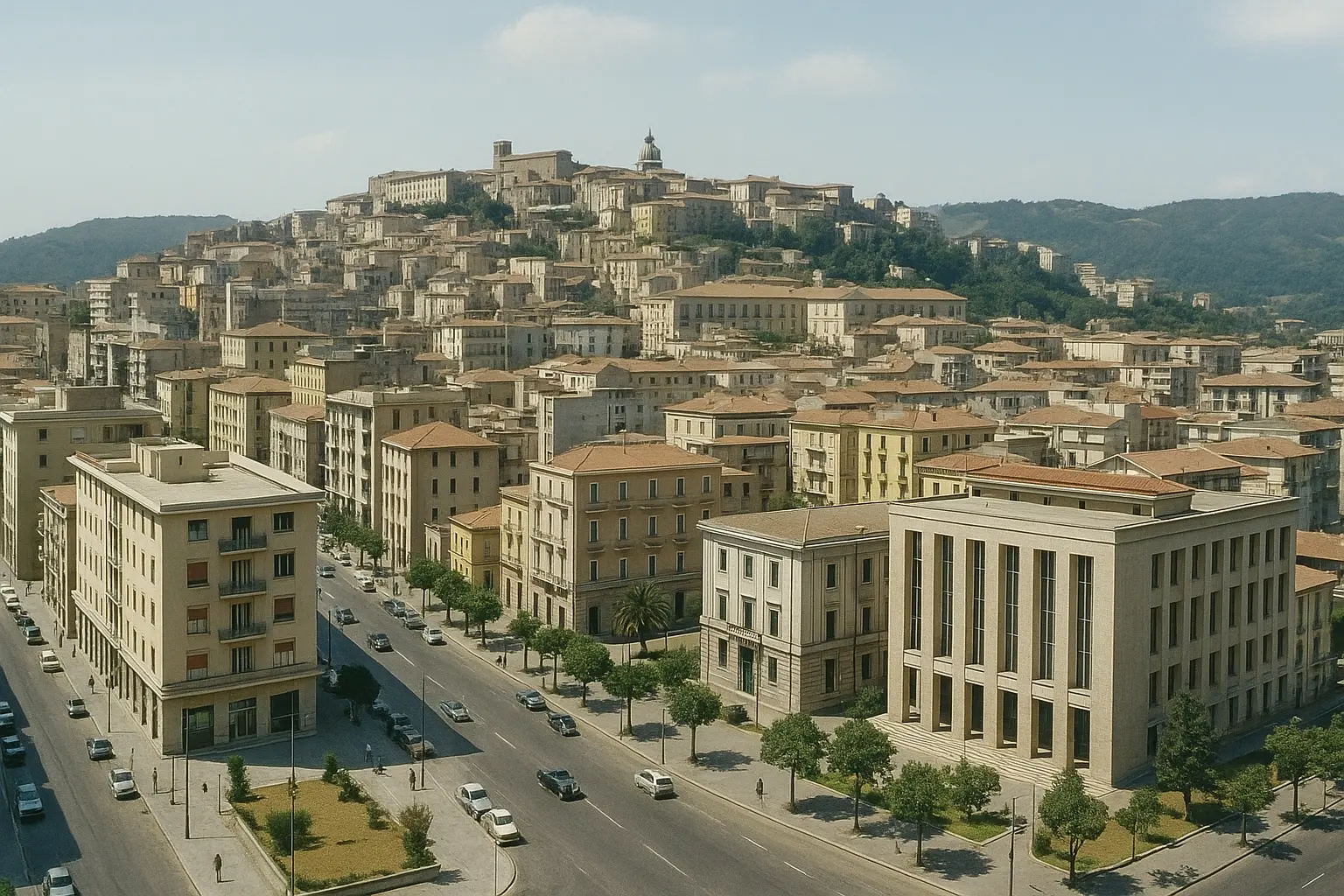
Thus, Catanzaro is born not just as a simple settlement, but as a symbol of hope and rebirth, suspended between myth and reality, a bridge between sea and hill, between ancient and modern.
A place that invites those who discover it to cross time and walk in the footsteps of those who sought a safe refuge to preserve their own history.