The Aragonese: Economic and Artisanal Flourishing of Catanzaro in the 15th Century

Contenuto dell'articolo
At the dawn of the fifteenth century, under Aragonese rule, Catanzaro went through a phase of profound social and economic transformation, while maintaining its vocation as a cultural and commercial center.
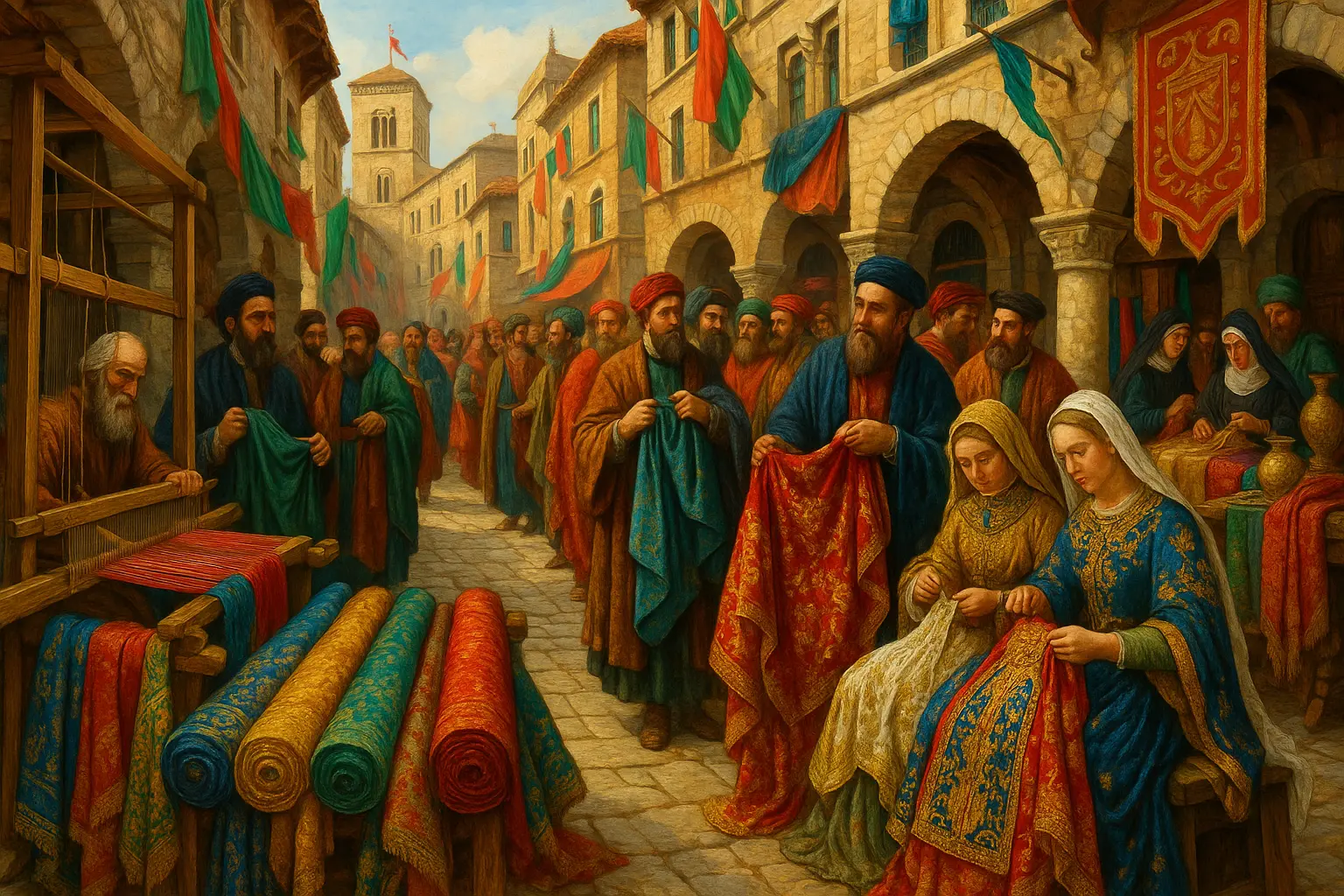
The silk school and trade continued to prosper, as well as the arts and crafts, animated by an ancient tradition of excellence.
Despite the burden of Spanish fiscalism, the silk artisans of Catanzaro were famous throughout the continent for the extraordinary quality of their fabrics.
In 1470, their fame reached France, where the weavers of Tours and Lyon sent a formal request to the masters of Catanzaro to come overseas to establish a school of excellence in silk processing.
The Calabrian masters accepted and brought to Tours and Lyon the refined techniques of brocades, velvets, and composite fabrics, transmitting a craft heritage that helped shape the great European textile tradition.
In the heart of the historic center of Catanzaro, the "Filanda" district still preserves traces of that golden age: a name that evokes the ancient workshops and schools where spinning and weaving took place, the hub of a craftsmanship passed down through the centuries.
At that time, Calabria was a land of fiefs, divided between feudal lords loyal to the Aragonese Crown and others oriented towards autonomy, with elaborate agreements among local lords.
In this context, Catanzaro's "demanialità" played a significant role, deeply influencing the city's political and social dynamics, making it a point of balance between royal power and local autonomies.