The Isthmus of Catanzaro: the natural bridge between the Tyrrhenian and Ionian Seas
Contenuto dell'articolo
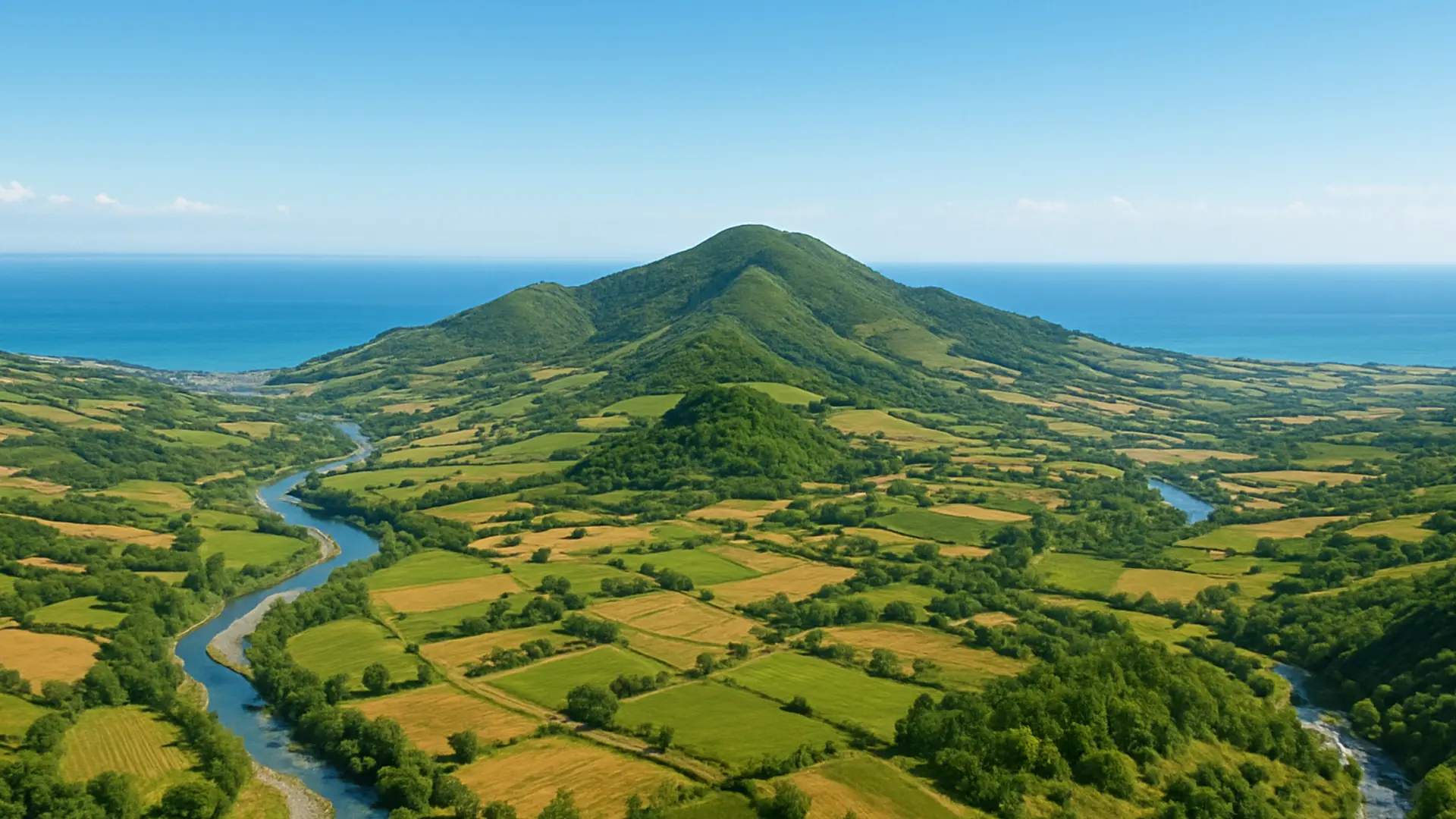
The isthmus of Catanzaro is one of the most surprising geographical phenomena in Italy, the narrowest point of the Peninsula: here, only 30 kilometers separate the Ionian Sea from the Tyrrhenian Sea, along the depression that divides the southern ends of the Calabrian Apennines from the northern part of the Serre.
A unique landscape between two seas
In the narrowest stretch, the valley measures just 2 km, widening towards the plain of Sant'Eufemia to the west and the valley of Corace to the east, embracing both coasts.
South of Marcellinara, on the so-called "Saddle of Marcellinara," you touch not only the lowest point of the Calabrian Apennines (250 m above sea level), but also the narrowest point between two seas in continental Europe.
From the heights of the municipalities of Tiriolo, Marcellinara, and Catanzaro, the view can optimally span the blue of the Tyrrhenian and Ionian Seas simultaneously - a rare and symbolic panorama, where the waters only touch each other ideally.
The rivers that mark the territory
The isthmus is crossed by two torrential watercourses: the Amato and the Corace.
Both originate from the Sila Piccola, flow parallel separated by just 2 km, and then diverge towards the opposite Calabrian coasts: the Amato flows west into the Tyrrhenian Sea, the Corace east into the Ionian Sea, sculpting for millennia the geography of this key corner of Calabria.
A strategic point in history
This strip of land, crucial even in ancient times, was chosen by Marcus Licinius Crassus as a barrier: during the revolt of Spartacus (1st century BC), to stop the march of the slaves northward, he built a real wall here that cut Calabria in two, exploiting the morphology of the isthmus as a natural barrier.
Navigation projects between the Ionian and Tyrrhenian Seas
In the 20th century, during the fascist period, the isthmus was the subject of futuristic proposals - never realized - for a navigable canal that directly connected the two seas, inspired by the epics of Suez and Panama.
A visionary idea that testifies to the strategic and symbolic importance of this natural corridor.
Today the isthmus of Catanzaro is not only a landscape treasure but also a meeting point between cultures, seas, and routes, a unique place where geography and history intertwine, between panoramas that embrace two seas and stories of peoples who have crossed the Calabrian millennia.