Vai alla sezione principale
Vai alle informazioni attrazione
Vai alla descrizione
Vai alle indicazioni
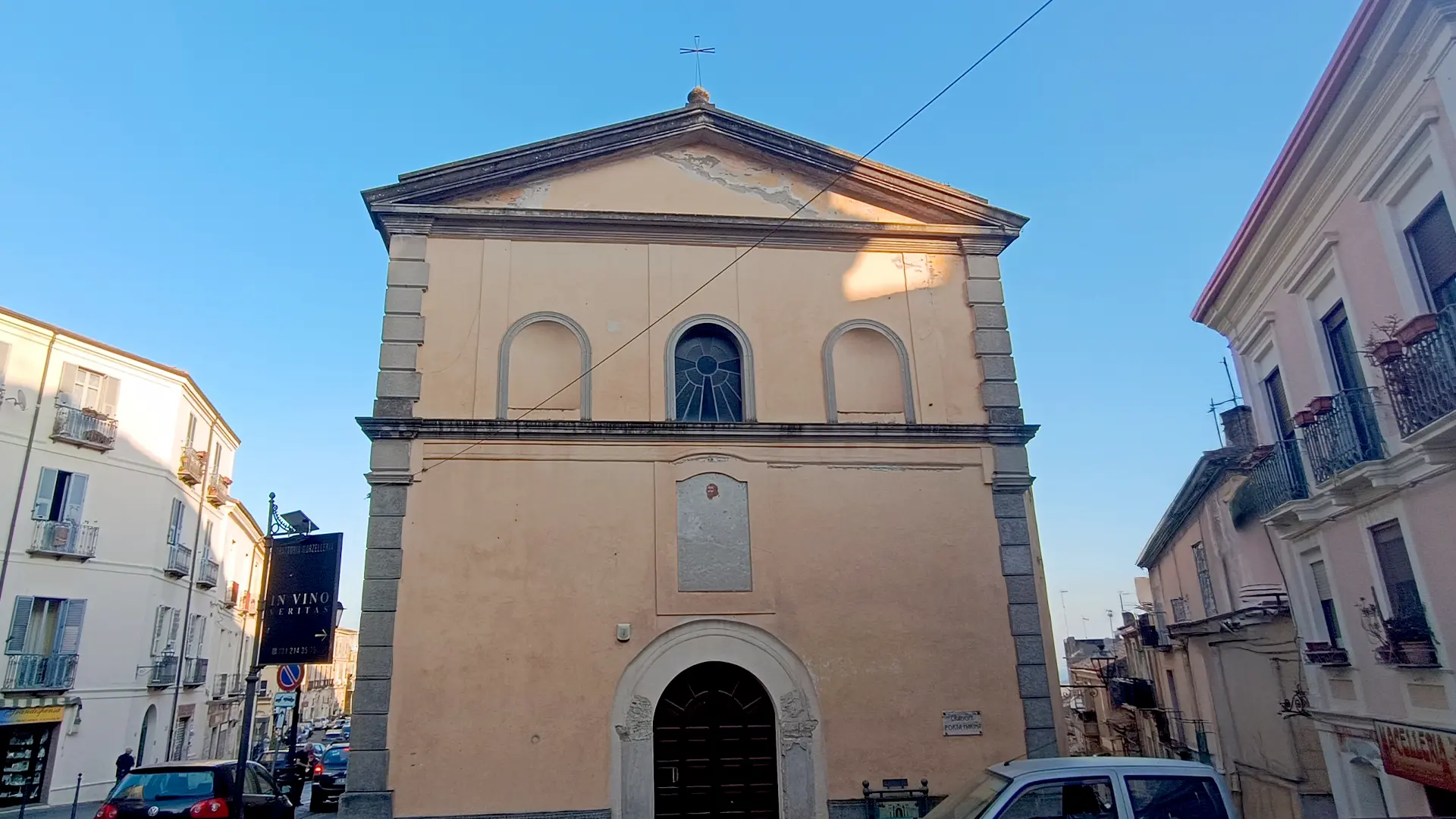
Church of San Rocchello (or Rocco)
Accessibility
- Family friendly
Descrizione attrazione
Church of San Rocchello: where popular devotion becomes art
In the characteristic neighborhood that bears its name, the Church of San Rocchello represents one of the dearest places to the devotion of Catanzaro. This small temple, born from a miraculous legend and grown through the centuries thanks to popular faith, preserves art treasures that tell the spiritual and social history of a community that has always known how to turn adversities into opportunities for rebirth.
The legend that changed a neighborhood
The story of San Rocchello is indissolubly linked to one of the most dramatic episodes of sixteenth-century Catanzaro: the plague of 1562. According to tradition, when the epidemic was decimating the population, San Rocco appeared outside Porta di Mare to the plague-stricken artisan Pignero Cimino, delivering a miraculous ointment that freed the city from the scourge.
In exchange for the miracle, the saint asked for a church to be built on the hill of San Trifone, right where the people of Catanzaro had already tried to build a temple in his honor, giving up only because of the collapse of a lime kiln. The noblewoman Guglielmina De Cumis promoted the initiative, founding in 1565 the Dominican monastery dedicated to Santa Caterina da Siena with an attached church dedicated to San Rocco.
From that moment, the hill of San Trifone changed its name to the hill of San Rocco, a name that extended to the square and the entire neighborhood that was forming around the monastery.
Two churches for a saint: the birth of San Rocchello
The influx of devotees to the convent church was such that it disturbed the contemplative life of the Dominican nuns. To solve the problem, a second church was built to transfer the venerated statue of the saint. This new temple was popularly called "San Rocchello" (little San Rocco), a name that extended to the surrounding streets and the square in front.
The construction must have taken place in the last decades of the sixteenth century: in 1593 the "Platea Gori" documents its existence, but in 1601 the pastoral visit of Monsignor Orazi found the parish seat temporarily moved to the convent because the church of All Saints "was threatening to collapse."
A strategic parish territory
The "restricted" parish of Santa Maria d'Ognissanti (this was the original title) extended over a strategic area of the San Rocco neighborhood, touching the borders of the parishes of Santo Stefano, San Biagio, and that of the Dominicans. As described in the "Platea Gori" of 1691, the territory started "from the church of the PP. Predicatori, continuing through the houses of the restricted area of S. Stefano, the valley of the bucceria, the monastery of S. Chiara, the church of S, Rocco Maggiore, the street of the trumpeters."
Twentieth-century transformations and recoveries
The 1950s and 1960s saw radical transformations of the external facades that erased the original compositional forms. Fortunately, some el...