MARCA - Catanzaro Museum of Arts: A Journey through Silk and Masterpieces
Accessibility
- Family friendly
Descrizione attrazione
Along what was once the National Road to Tiriolo (now via Alessandro Turco), stands a palace that houses a dual soul: the industrial one of a glorious past linked to silk and the artistic one of a present that celebrates centuries of Calabrian creativity.
Palazzo Marincola: When Industry Becomes Art
MARCA finds its home in what represents the last architectural testimony of the golden age of silk farming in Catanzaro.
This fascinating building, known as Palazzo Marincola, hides behind its elegant neoclassical facade an extraordinary industrial history.
The saga begins in the mid-19th century with Don Fedele Biamonte, a visionary entrepreneur who built the city's first plant "outside the Porta di Terra": half silkworm breeding facility, half spinning mill for processing the precious yarn.
In 1857, the brothers Filippo and Luigi Marincola - barons of San Floro and brothers-in-law of Biamonte himself - acquired and expanded the building, transforming it into what the chronicles of the time defined as "the most perfect spinning mill that Catanzaro has ever had."
The architecture itself tells this industrial vocation: the north wing, longer and characterized by a continuous series of windows on both floors, reveals the ancient workspaces, while the chimney that stands out towards the Fiumarella valley testifies to the innovative steam spinning that made the plant famous throughout the South.
A Palace Breathing History
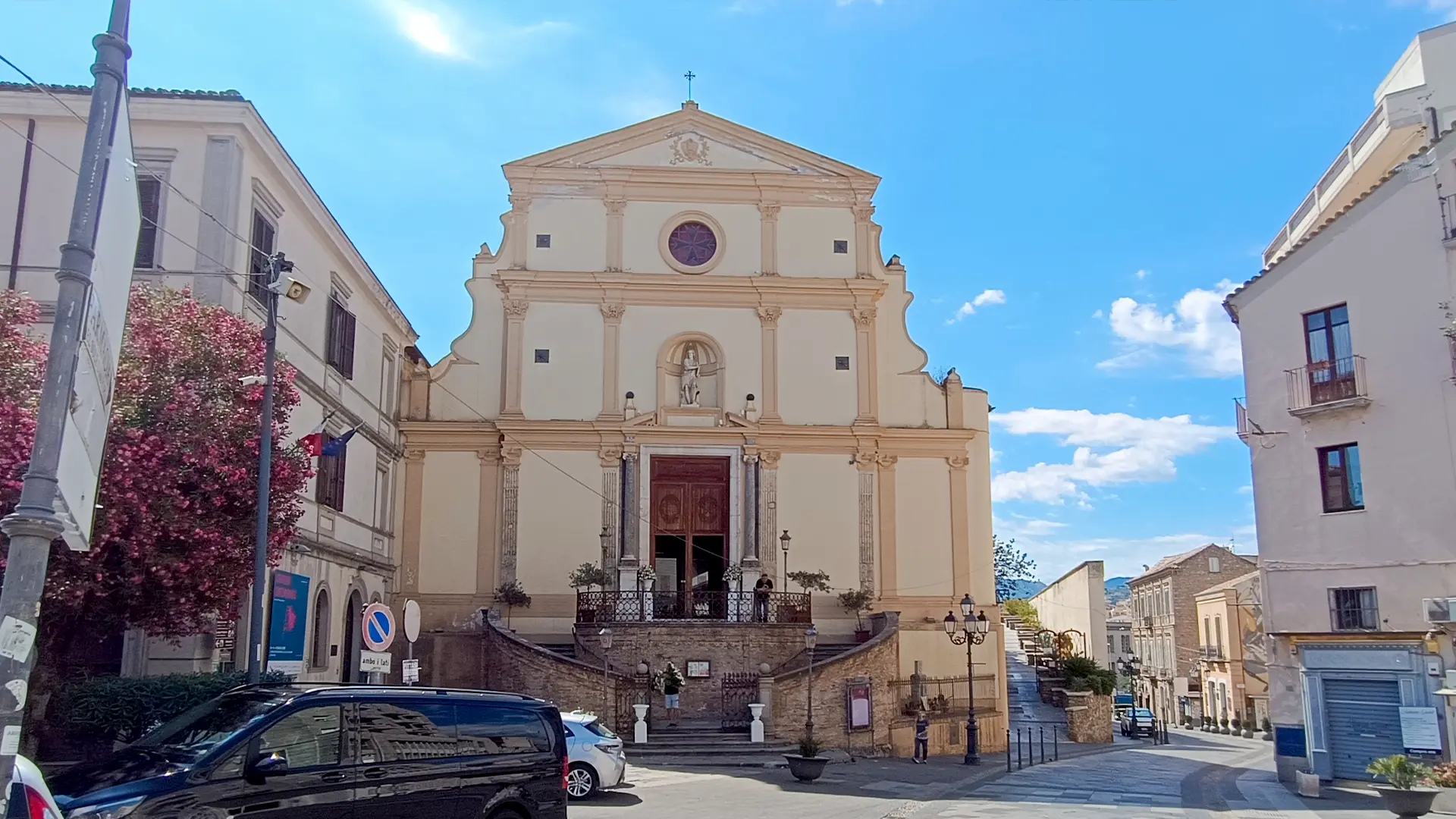
Developed on two floors around a central courtyard, with suggestive underground environments that exploit the particular conformation of the terrain, the building presents a facade of rare elegance.
The smooth banded rustication, interrupted by round arches and large windows, culminates in the entrance portal surmounted by the baronial coat of arms in Marincola marble.
The rusticated pilasters of the first floor and the projecting cornice supported by neoclassical brackets with triglyph motifs complete an architectural ensemble of remarkable value.
The Artistic Renaissance: From Looms to Canvases
After ceasing production activity between the late 19th and early 20th centuries - as happened to all city spinning mills - the building had a second life as the seat of the Provincial Institute for the Deaf.
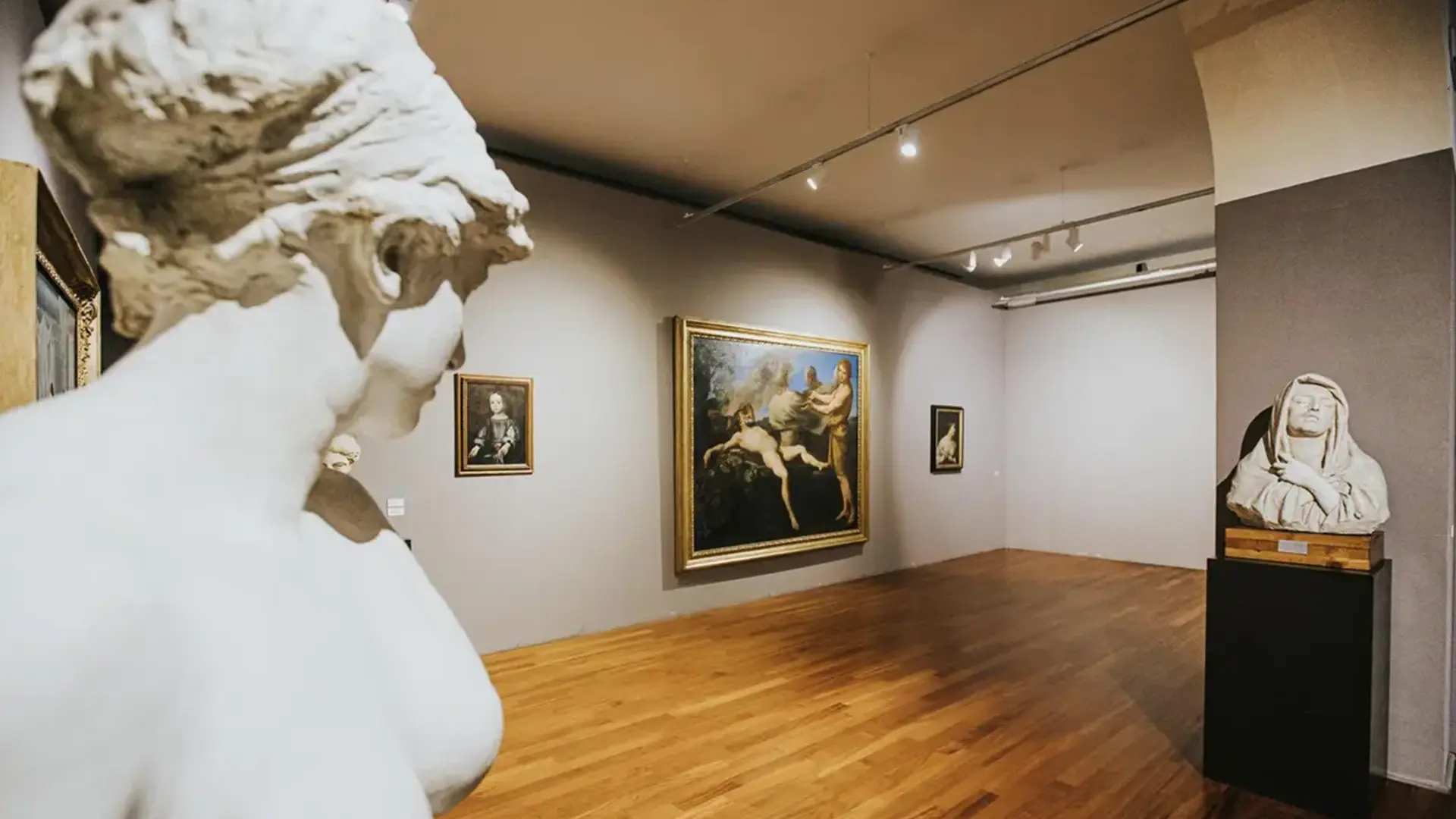
But its noblest destiny awaited in the present: to become the treasure chest of one of the most significant art collections in Calabria.
The Masters of the School of Cortale
The beating heart of the museum is represented...