Palazzo Doria: 19th Century Elegance in the Ancient Giudecca
Accessibility
- Family friendly
Descrizione attrazione
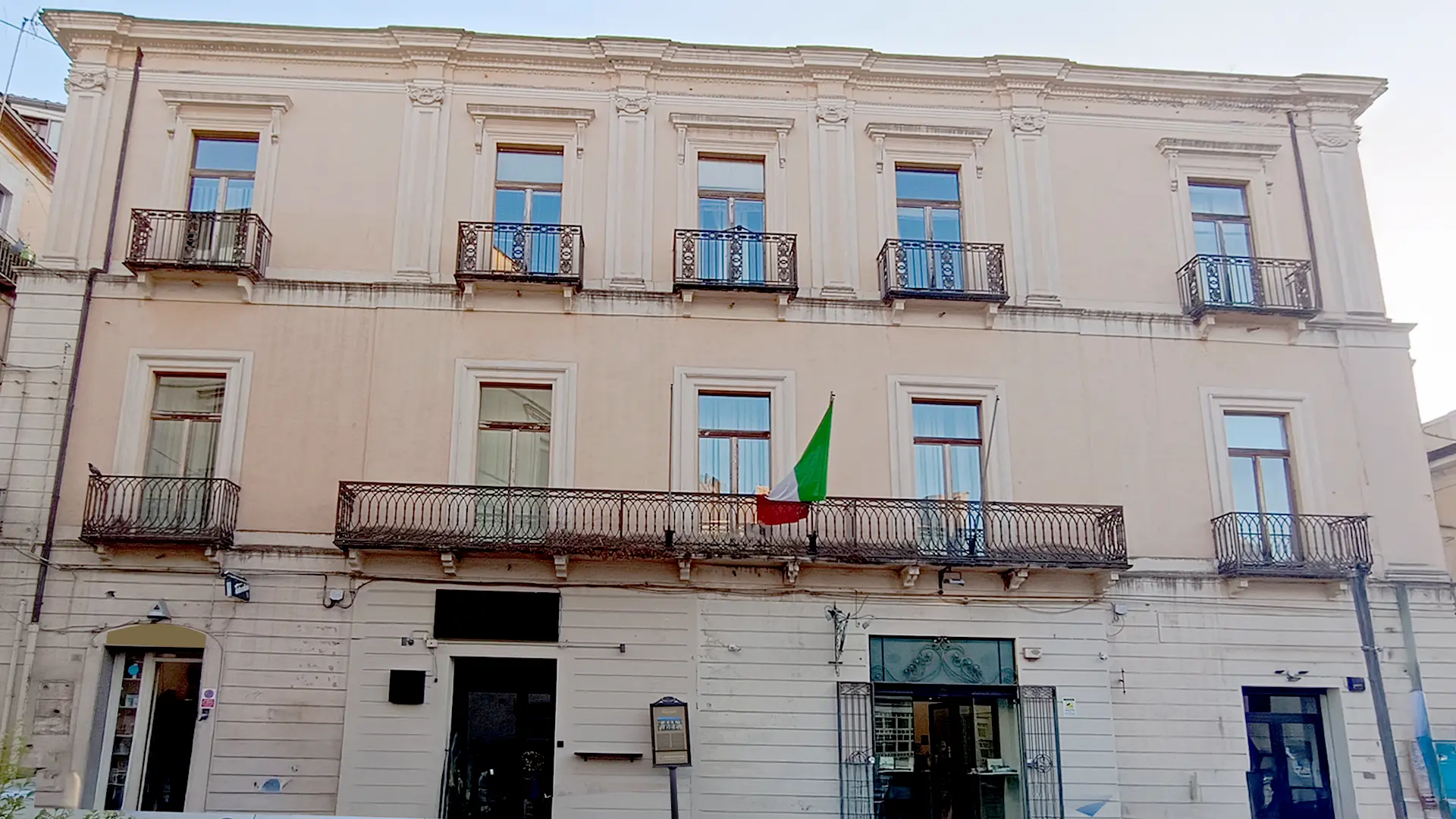
Cavour Descent (Guccerie Descent) - 19th Century In the heart of the ancient Giudecca of Catanzaro, where once echoed Jewish prayers and subsequently Christian ones in the parish of Santo Stefano protomartyr de Malfitanis, in the first half of the nineteenth century stands one of the most elegant and imposing palaces in the historic center: Palazzo Doria.
This building represents a perfect example of how nineteenth-century neoclassical architecture has been integrated into the medieval urban fabric, creating new perspectives and redefining the spaces of the modern city. A Palace between History and Legend Palazzo Doria is strategically located at the end of Cavour Descent - known by the people of Catanzaro as "Guccerie Descent" - overlooking the main facade. Its three wings are arranged on orthogonal axes that tell the urban history of the city: one leads to Palazzo Fazzari, where the ancient synagogue stood, later transformed into a Christian church; the other towards what is now Piazza Nuova Descent, but was once called "Cioéu Descent". The Mystery of "u' Cioéu" A precious pencil sketch from 1860, preserved in the De Nobili Library in the Frangipane collection and executed by the engineer Basilio Frangipane, documents the toponymy of the time. The name "Cioéu Descent" derives from a picturesque character of nineteenth-century Catanzaro, immortalized by Giovanni Patari in his "Catanzaro of other times. 1870-1920". Patari describes "u' Cioéu" as one of the most memorable "characters" of the city: "u' Cioéu who, just by appearing, bold and threatening, made us afraid...". A character so distinctive as to give its name to an entire street and to be remembered in a caricature of the time. The Urban Transformation of the Late Nineteenth Century Palazzo Doria was a protagonist of the major redefinition works of Corso started in 1870, which radically transformed the face of Catanzaro. The building was particularly affected by the arrangements of: - Via Principe Umberto (currently via Jannoni) - The junction with Cavour Descent The Controversies of Progress The modernization works were not without conflicts. The lowering and raising of street levels in different sections caused a dispute between some owners - in particular the Maltese and the Doria - and the Municipality. The owners requested a reassessment of the expropriation value because the entrances of their palaces remained depressed compared to the new street axis, a testimony to the technical and social difficulties of urban modernization. Architecture: Refined Neoclassicism The Main Facade: Discreet Elegance The main entrance, located on the secondary street connecting the Market square to Corso, shows a neoclassical elegance of rare refinement: - Two rusticated Tuscan pilasters resting on mirrored pedestals - Molded horizontal cornice framing the doorway - Molded stucco architrave with iron and cast iron rostra - Balcony...