Vai alla sezione principale
Vai alle informazioni attrazione
Vai alla descrizione
Vai alle indicazioni
Palazzo Fazzari and the Florentine Renaissance
Accessibility
- Family friendly
Descrizione attrazione
1870-1874, Designers: Enrico and Federico Andreotti
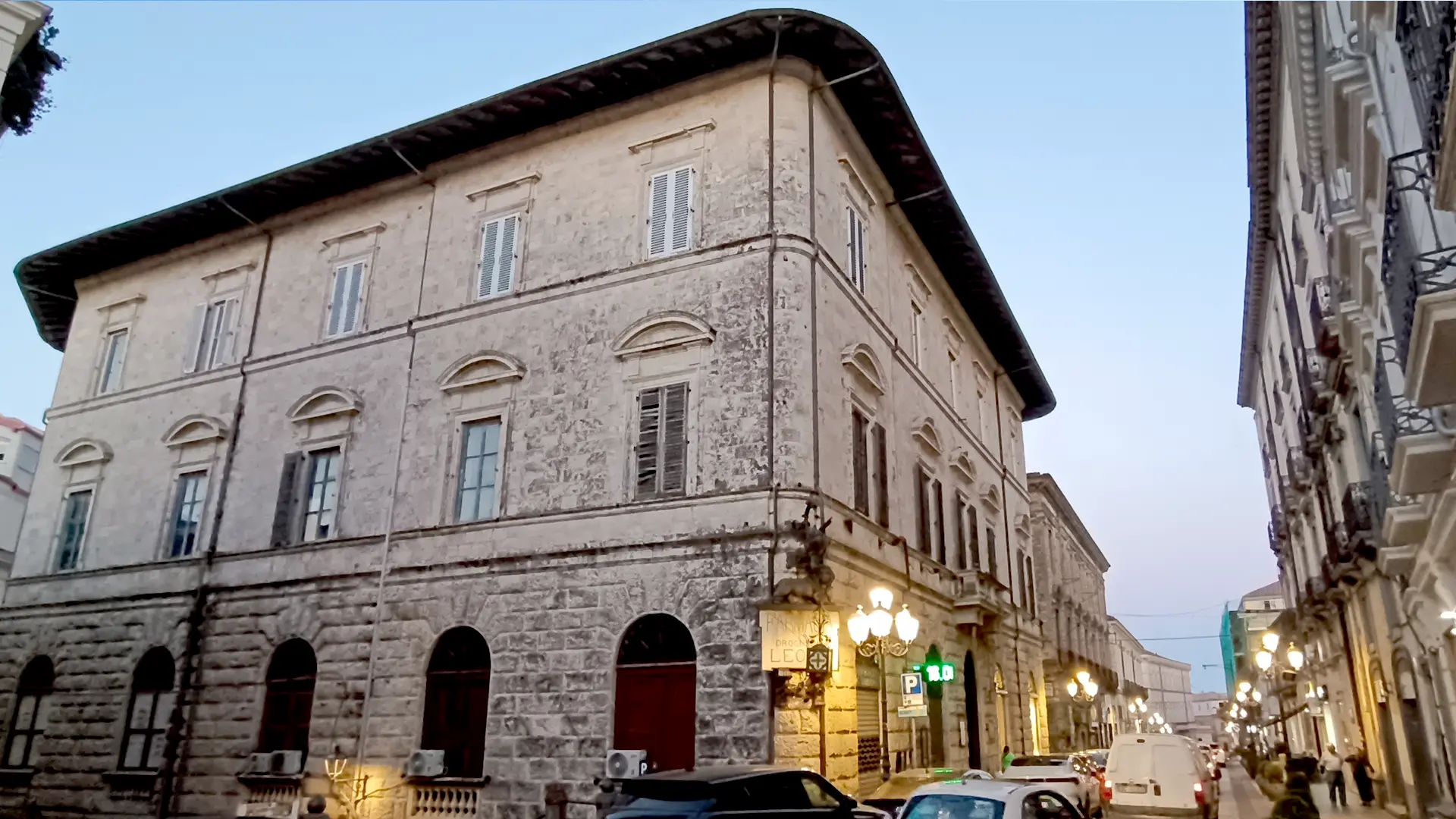
In the heart of the ancient Giudecca of Catanzaro, where the synagogue once stood, later transformed into the church of Santo Stefano, stands one of the most extraordinary palaces in the South: Palazzo Fazzari. Built between 1870 and 1874, this neorenaissance masterpiece represents a unique moment in Calabrian architectural history, when Florentine culture of united Italy masterfully merged with local traditions, creating a work of rare beauty and historical significance.
Catanzaro Transforms: From the Middle Ages to Modernity
The second half of the 19th century marks an epochal turning point for Catanzaro. The medieval city, still enclosed within ancient walls, begins to open up to new neighborhoods: the Baracche and the Baraccone to the north, Fondachello and Sala to the south. But it is above all the Unification of Italy that brings a new urban awareness.
In 1870, the city approves the Manfredi Plan for the rectification of the ancient road axis - the medieval via Mesa - and the creation of Corso Vittorio Emanuele. It is in this context of renewal that Palazzo Fazzari is born, a symbol of a Catanzaro looking towards the future without forgetting its roots.
The Garibaldian General and the Florentine Dream
The client is Achille Fazzari, a Garibaldian general who perfectly embodies the spirit of united Italy. After selling the Palazziata Corrado house and a group of houses in the Santo Stefano district, Fazzari obtains permission to build his palace with the commitment to demolish part of the purchased building to favor the widening of the main street to 11 meters, according to the plan drawn up by the architect Parise in 1868.
The Architects: The Florentine Masters
The project is entrusted to the Florentine architects Enrico and Federico Andreotti, although doubts remain about the specific authorship of the work. What is certain is that these masters bring to Catanzaro the architectural culture of Florence, with a precise reference to the neo-Cinquecento that had gained strength around the glorious Florentine Academy.
As historian Emilia Zinzi observes, Palazzo Fazzari represents "an isolated presence and, perhaps for this reason even more significant in its formal qualification, of the architectural culture of united Italy".
The Architecture: Perfect Synthesis of Tradition and Innovation
Calabrian Inspiration
The Andreotti brothers demonstrate a deep knowledge of local architecture, taking elements from Calabrian sixteenth-century palaces, particularly in the corner compositional solutions that recall:
- Palazzo Cavalcanti in Cosenza
- Palazzo Di Francia in Vibo Valentia
These solutions reveal a precise "nineteenth-century" will to emphasize the importance of the two road axes compared to the main street.
The Material Choice: The Diorite of Stalettì
The choice of Stalettì diorite for the rustication of the ground floor pays homage to the Calabrian territory...