Vai alla sezione principale
Vai alle informazioni attrazione
Vai alla descrizione
Vai alle indicazioni
Palazzo Ricca: The Spanish Fortress of Pianicello
Accessibility
- Family friendly
Descrizione attrazione
Largo Pianicello - 16th Century
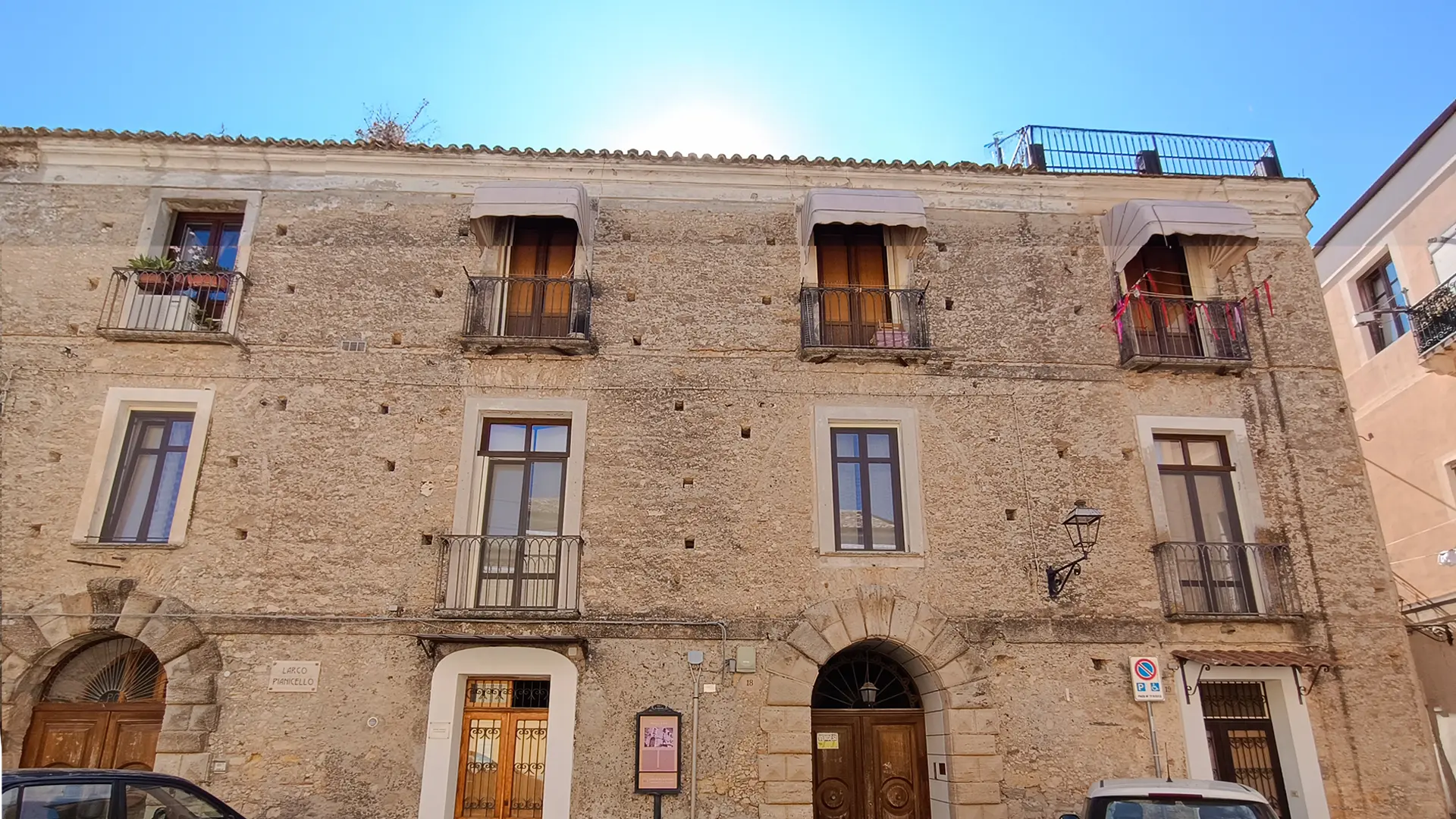
In the heart of the ancient Pianicello neighborhood, dominating the homonymous square with its mighty bulk, stands one of the most imposing and characteristic palaces in the historic center of Catanzaro: Palazzo Ricca. This late-sixteenth-century building represents a perfect example of Calabrian noble architecture, a testimony to the presence and prestige of one of the oldest and most influential families in the city.
The Ricca Family: Spanish Nobility
The palace belonged to the ancient and noble Ricca family of Spanish origin, enrolled in the nobility of Taverna and Catanzaro. This dual noble affiliation attests to the importance and extent of the family heritage, which extended from the Sila mountains to the capital, following the trade routes that connected the inland to the sea.
The Spanish presence in Calabria, consolidated during the sixteenth century, brought not only new noble families but also new architectural and decorative models that merged with local traditions, creating an original and recognizable artistic language.
Architecture: Power and Tradition
An Imposing Structure
Palazzo Ricca stands out in the urban landscape for its large dimensions and its dominant position on Largo Pianicello. The architectural structure immediately expresses the economic and social power of the commissioning family through its bulk and its scenic presence.
The "Twin" Portals: An Architectural Unicum
The most distinctive feature of the palace is the presence on the facade of two "twin" portals, an architectural solution common to other contemporary palaces in Catanzaro:
- Palazzo Tarsitani in Piazza delle Cocole
- Palazzo Scoppa in Via del Gelso Bianco
This typically Calabrian solution had both practical and symbolic functions: it allowed separate access to different parts of the building and manifested the family's prestige through the duplication of the most representative element of the facade.
The Portals: Masterpieces of Calabrian Tradition
Classic Compositional Morphology
The portals of Palazzo Ricca represent a perfect example of the architectural-decorative tradition of sixteenth-century Calabria:
Architectural Structure:
- Classical round arch
- Two mirrored base voussoirs acting as pedestals
- Double diamond-pointed voussoirs alternating with smooth bossed voussoirs
- Keystone with the classic volute featuring a curling vegetal motif
Stylistic Comparisons in the City
This type of portal is found in other important palaces in Catanzaro:
- Palazzo Schipani in Piazza Roma (sixteenth century)
- Palazzo Pugliese (contemporary)
- Palazzo Marincola (contemporary)
- Palazzo Longobucco-Castagna (later, with a variant of lateral volutes)
These comparisons attest to the existence of a local school of master stonemasons who had codified a recognizable decorative language of high artistic quality....