Vai alla sezione principale
Vai alle informazioni attrazione
Vai alla descrizione
Vai alle indicazioni
Palazzo Ruggero-Raffaelli: From Prayer to Civil Power
Accessibility
- Family friendly
Descrizione attrazione
1577, renovations 1881
Architect: Michele Manfredi
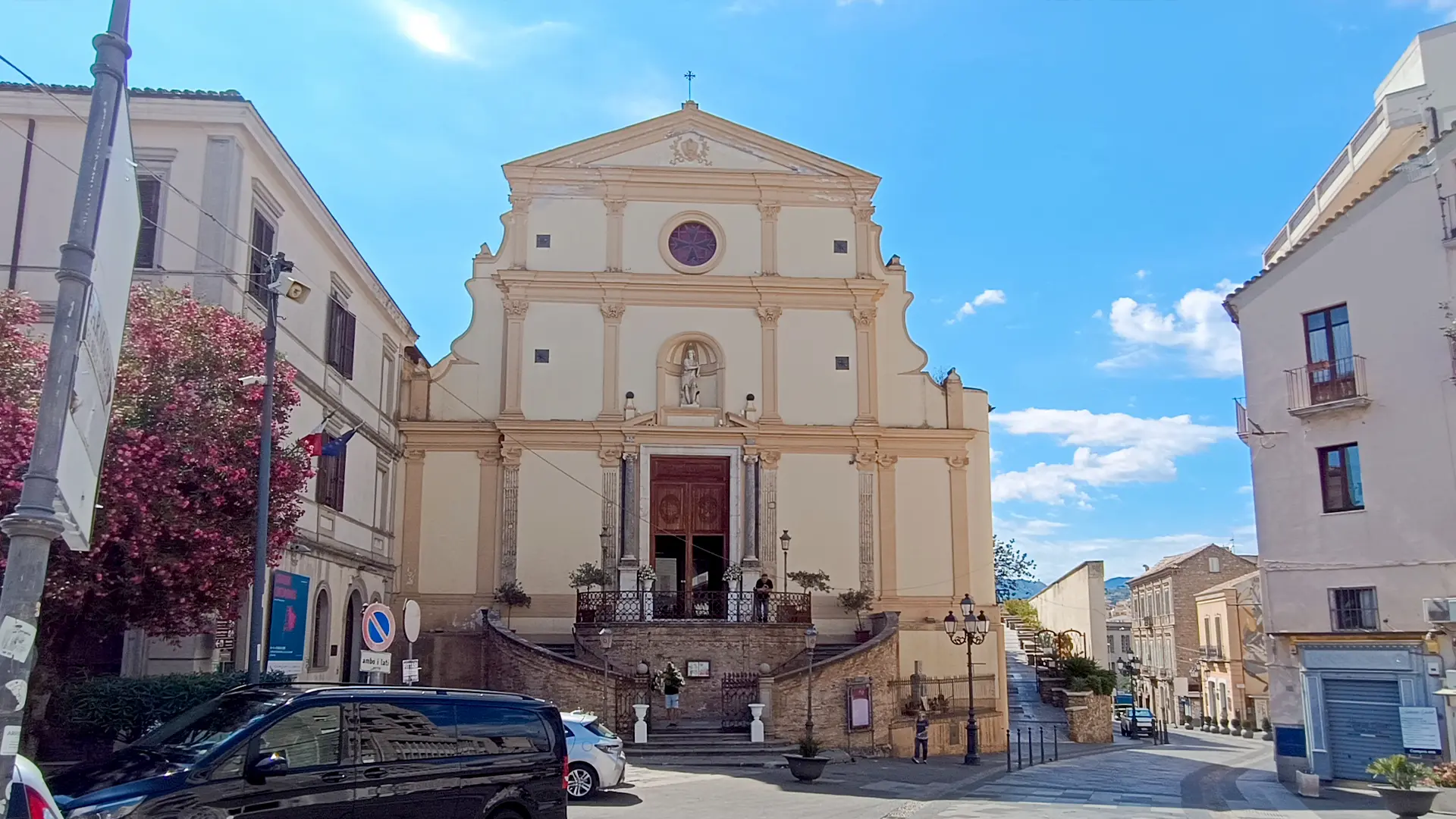
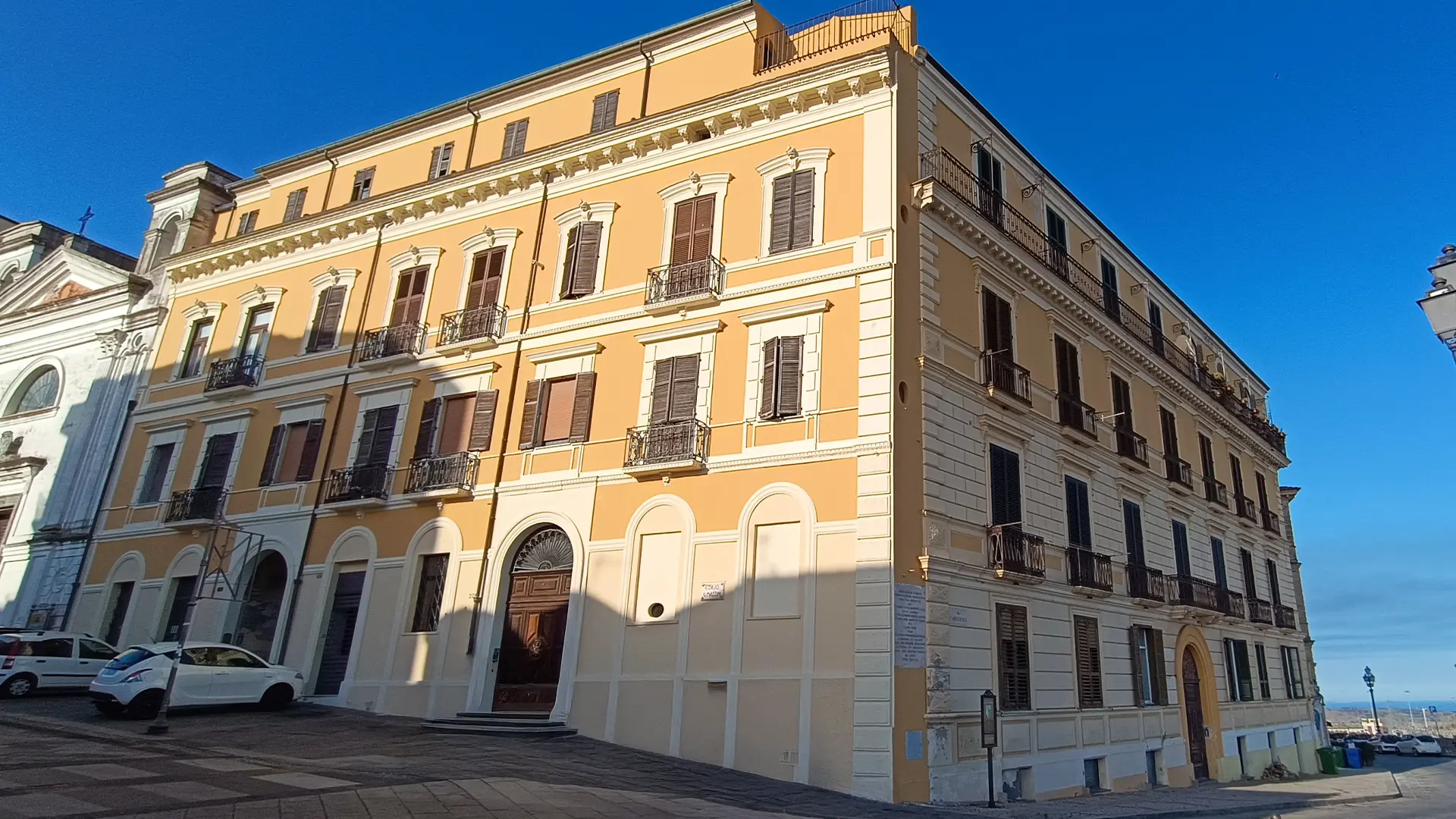
At the intersection of Corso Mazzini and via De Seta, leaning against the sixteenth-century church of San Francesco di Paola, stands one of the most layered and fascinating palaces in Catanzaro: Palazzo Ruggero-Raffaelli. This building tells a story that spans over four centuries, from its foundation as a convent of the Minimi Fathers in 1577 to its nineteenth-century transformation into a private residence, witnessing the great social, religious, and urban transformations that have marked the city.
The Minimi Fathers: Custodians of Franciscan Spirituality
The Foundation of the Convent (1577)
The complex was founded in 1577 as a convent of the Minimi Fathers or "Paolotti" of San Francesco di Paola, a religious order founded by the Calabrian saint. The convent was part of the network of religious houses that characterized Catanzaro in the sixteenth century, quickly becoming a spiritual and cultural reference point for the city.
The Earthquake of 1638: First Reconstruction
Father Pandulfo O.M. in his memoirs recounts how the original convent had "a very large and double dormitory, in which in addition to the common ambulatory, each cell had its own small bed." But on April 6, 1638, a strong earthquake struck the Calabrian province. Although Catanzaro, "by the intercession of the Holy Father (San Francesco) and of S. Vitaliano his protector, was not subject to any painful damage," the buildings of the convent were damaged.
The Fathers then decided to "lower the same Convent and thus lowered to hold it totally in check with chains and to reduce it to the form that is seen."
The Golden Age: Father Paolo Gaspa (1715)
In 1715, at the initiative of Father Paolo Gaspa and based on a project by a Messina architect, the convent experienced a season of great splendor. A "large cistern was built in the middle of the cloister" which made the convent famous and was of great utility to all the citizens of Catanzaro.
The intervention was so radical that the buildings "did not seem like those that were there before but (seemed) completely different," with the refectory adorned and moved, the cloister and cells brought back "to a more beautiful form."
The Earthquake of 1783: The End of an Era
The Devastation
On February 5, 1783, the disastrous earthquake that struck 397 inhabited centers of Calabria Ulteriore (82 of which were completely razed to the ground) did not spare the convent complex. Chronicles narrate that only the severely damaged side walls of the "Paolotti" monastery remained, while all wooden works were destroyed.
The Suppression: Sacred Fund and Dispersion
With the establishment of the Sacred Fund, the convent was suppressed along with eleven other convents in the city and 236 religious houses in Calabria Ulteriore. All assets, including the "rich and important library," were sold and dispersed, a cultural loss of immeasurable value.
The Last Attempt (1796-1809)
The Minimi Fathers attempted a return in 1796, but the decree...